
Roof Work
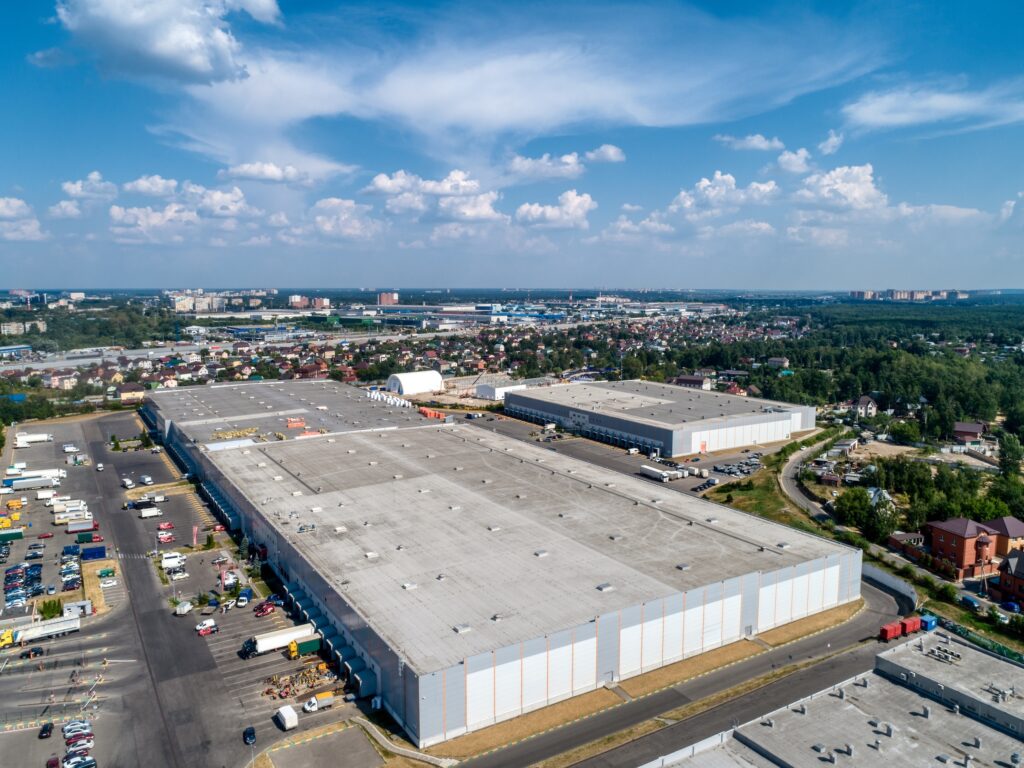
Warehouse and Distribution Center Roofing in Oakland, CA starts with roof evidence.
The UPS Worldwide Hub at Oakland International Airport and the our company intermodal logistics campus adjacent to the Port of Oakland's outer harbor represent the anchor of one of the most valuable industrial real estate markets in the United States. Oakland's warehouse and distribution infrastructure handles a significant share of trans-Pacific container imports, and the roofing demands on these structures reflect a climate that is more complex than its Mediterranean reputation suggests: Alameda County experiences atmospheric river storm events that can deliver six to eight inches of rain in twenty-four hours, foggy marine layer conditions that keep roofs perpetually damp through the summer months, and the seismic loading requirements that distinguish California warehouse roofing engineering from practice anywhere else in the country.
Drainage design for Oakland warehouses is dominated by the atmospheric river events that arrive with little warning and dump extraordinary rainfall volumes on Alameda County's flat industrial lands. Oakland's 100-year, one-hour rainfall intensity runs approximately three inches per hour, but multi-hour atmospheric river events can sustain two-inch-per-hour rates for eight to twelve consecutive hours, a scenario that challenges even well-designed drainage systems if any component is blocked. Primary interior drains should be sized for a twenty-five-year event minimum, with overflow scuppers sized for the 100-year event set two inches above the primary drain rim elevation. Tapered insulation creating one-quarter inch per foot of positive slope is required by the California Building Code for all new commercial roofing assemblies.
TPO and PVC are both widely used on Oakland warehouse roofs, with PVC capturing a larger share of the market than in most other regions because of California's relatively mild temperature extremes and PVC's excellent resistance to the grease and oil deposits common on warehouse roofs near the port. A sixty-mil mechanically fastened PVC or TPO over polyisocyanurate insulation is the standard new construction specification at Port of Oakland logistics facilities. EPDM is also used, particularly on re-roofing projects at older warehouse buildings with metal decks that are not conducive to the fastener densities required by mechanically fastened single-ply systems. California Title 24 requires cool roof compliance on commercial re-roofing projects, which effectively mandates a white or light-colored membrane.
Dock penetrations at Oakland port-adjacent warehouses face the same corrosion environment as Norfolk and New Orleans, but with the additional complication of the Port of Oakland's strict environmental compliance protocols. All roofing contractors working on port-adjacent properties must comply with the Port of Oakland's contractor environmental requirements, which restrict open kettles for modified bitumen work and require specific waste disposal procedures for old EPDM and TPO membrane debris. Metal flashings within the marine influence zone should be specified in Type 304 stainless steel at minimum, with Type 316 for the zone within one hundred yards of the inner harbor. Galvanized steel corrodes to failure within three to four years in this environment.
Seismic loading is a unique design requirement for California warehouse roofs that has no parallel in most other markets. The 2022 California Building Code requires that rooftop mechanical equipment, including HVAC units and exhaust fans on warehouse roofs, be anchored to seismically rated curbs capable of resisting the lateral forces from an earthquake of the design-level magnitude for Alameda County. A standard equipment curb that is adequate for wind uplift resistance may not meet the additional shear and overturning requirements from seismic loading. Any warehouse re-roofing project that involves HVAC curb replacement or new equipment installation must include a seismic analysis of the curb anchorage system by a California-licensed structural engineer.
Forklift exhaust management at Oakland warehouses is subject to the Bay Area Air Quality Management District's Regulation 11, Rule 18, which regulates diesel and alternative fuel mobile equipment emissions. The BAAQMD has incentive programs that support electrification of forklift fleets, and many Oakland port operators have completed or are completing the transition to electric equipment. As with other transitioning markets, the roofing implication is the systematic removal of old propane exhaust penetrations and the installation of electrical conduit penetrations for charging infrastructure. The Port of Oakland requires that all penetration work on buildings within the port perimeter be permitted and inspected by the Port's own construction department, in addition to City of Oakland permits.
Energy efficiency at Oakland warehouses is governed by California Title 24 Part 6, which establishes some of the most stringent commercial energy requirements in the United States. Title 24 mandates cool roof compliance (SRI minimum 75 for low-slope commercial roofs) and above-deck insulation at minimum R-19 for warehouse occupancies. These minimums are below what most experienced Oakland roofing contractors recommend; R-25 or R-30 above-deck insulation achieves a meaningful return through PG&E energy savings, and PG&E's commercial rebate programs can offset a significant portion of the insulation premium. California's HERO financing program allows commercial property owners to finance energy efficiency improvements through a property tax assessment, which can make the higher insulation investment cash-flow positive from the first year.
Scheduling an Oakland warehouse re-roof requires awareness of the atmospheric river season that runs roughly October through April, with peak activity in November through March. The practical construction window is May through September, with June through August being the most reliable period free from significant rainfall risk. Fall installations are possible but require daily weather monitoring and a rapid-cover protocol for exposed deck sections because atmospheric river events can develop with only twenty-four to forty-eight hours of warning. Oakland's summer marine layer keeps relative humidity above seventy percent through the overnight hours, which means adhesive-applied systems must allow extra cure time before application of the next membrane layer.
Selecting an Oakland warehouse roofing contractor requires verifying their California Contractors State License Board Class C-39 roofing license, their familiarity with Title 24 cool roof documentation requirements, and their experience working in the Port of Oakland's permitting environment. Contractors from other states operating in California under emergency provisions must still work under a California-licensed subcontractor for all labor, and the property owner is responsible for confirming this arrangement is in place before work begins. Request copies of the contractor's CSLB license, their Title 24 documentation experience, and their Port of Oakland contractor approval status if the building is within the port perimeter.
- What does California Title 24 require for Oakland warehouse roofs?
- Title 24 requires a cool roof membrane with minimum SRI 75 for low-slope commercial roofs and above-deck insulation at minimum R-19 for warehouse occupancies. Most contractors recommend R-25 to R-30 for better energy savings and PG&E rebate eligibility. All re-roofing projects triggering Title 24 compliance require CEC documentation.
- What corrosion-resistant metal should be used for dock flashings near the Port of Oakland?
- Use Type 316 stainless steel within one hundred yards of the inner harbor and Type 304 stainless steel for all other port-adjacent locations. Galvanized steel corrodes to failure within three to four years in Oakland's marine environment. Specify aluminum or stainless fasteners at all metal-to-membrane connections.
- Are seismic requirements unique to California warehouse roofing?
- Yes. California requires that rooftop mechanical equipment be anchored to seismically rated curbs designed for lateral forces from the design-level earthquake for Alameda County. Standard wind-uplift-rated curbs may not meet seismic shear and overturning requirements. A California-licensed structural engineer must analyze curb anchorage systems on all equipment installations and replacements.
- What is the best construction window for an Oakland warehouse re-roof?
- May through September, with June through August most reliable. Atmospheric river events are active October through April, creating significant rainfall risk for exposed roof decks. Summer marine layer humidity requires extended adhesive cure times overnight. Apply for City of Oakland and Port of Oakland permits simultaneously to avoid scheduling delays.
- What contractor license is required for warehouse roofing in Oakland?
- California Contractors State License Board Class C-39 is required for all commercial roofing work in California. Out-of-state contractors must work under a California-licensed subcontractor. For buildings within the Port of Oakland perimeter, a separate Port contractor approval is also required in addition to the CSLB license and City of Oakland permit.